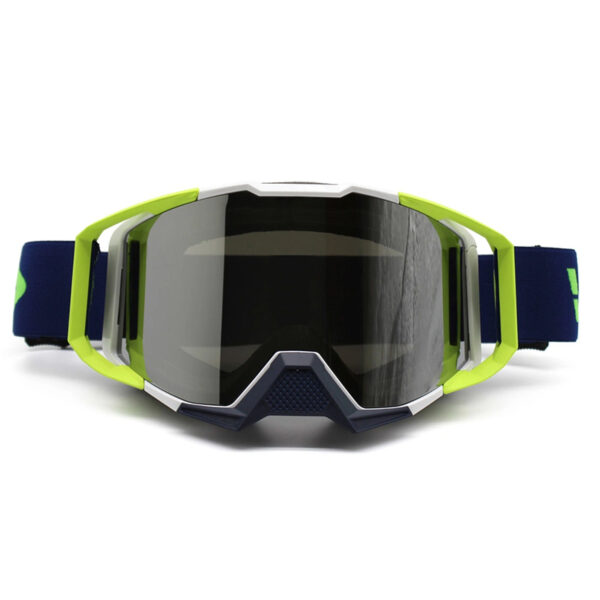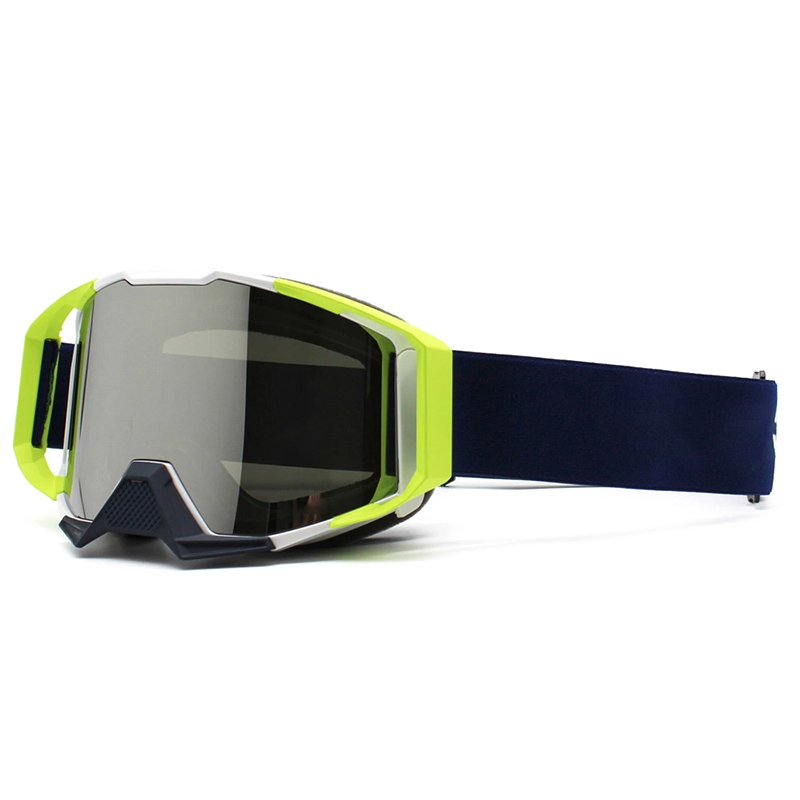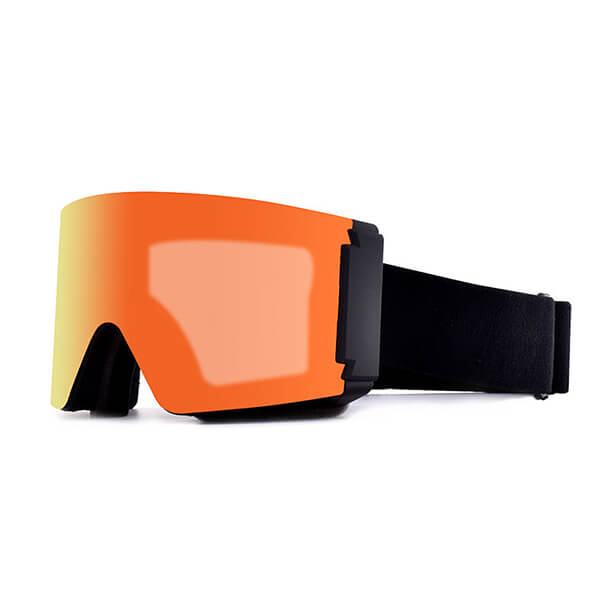
Introduction: The Chairlift Struggle
For generations, changing lenses mid-mountain meant struggling on freezing, wind-whipped chairlifts with frozen fingers, fussy tabs, and the high-risk gamble of dropping expensive gear. What are photochromic ski goggles? These light-adaptive goggles solve this exact headache by automatically shifting their tint in real-time as ambient light conditions change, eliminating the painful chairlift lens swap.
If you are asking, “Are photochromic ski goggles good?” or “Are photochromic ski goggles worth it?”, the short answer is a resounding yes. Modern options transition up to twice as fast as their predecessors, functioning as a true “one-lens” winter kit.
Riders searching for the best photochromic ski goggles can now find exceptional clarity and rapid adaptive speeds across all price ranges.
To evaluate real-world performance, our testing team spent months putting these goggles through rigorous on-snow testing across Jackson Hole, Colorado, and British Columbia. During our field reviews, we tested adaptive optics from leading industry brands including Smith Optics, Julbo, and Glade Optics in freezing blizzards, intense high-altitude sunlight, and flat-light shadows.
Understanding Photochromic Lens Technology
Before choosing your next pair, it helps to understand what a photochromic lens ski goggles option is, how it interacts with the elements, and how various frame geometries impact your view.
Brief Tech Overview & Quick Links:
Brief Tech Overview & Quick Links:
- The Chemistry: Photochromic lenses rely on embedded molecules (such as silver halides or organic dyes) that darken under direct UV radiation and revert to a clear state in overcast shade or tree lines. Read the A Deep Dive into Photochromic Chemistry.
- VLT (Visible Light Transmission): VLT measures the percentage of light that passes through a lens, spanning from low VLT (10% – 20%) for bright sun to high VLT (40% – 80%+) for heavy storm days or night skiing. Explore VLT & Light Transmission Guide.
- Bypassing the “Cold Freeze”: Premium brands leverage Low Temperature Sensitivity (LTS) technology to ensure molecules stay fast-reacting in sub-zero alpine temperatures (-25℃ to +5℃). Learn how modern optics survive sub-zero climates.
- Lens Profiles: Optical clarity depends on choosing a cylindrical (classic flat profile), spherical (curved on both axes), or toric (optimized curve) lens shape. Compare the pros and cons of each silhouette.
2026 Top Photochromic Goggles Comparison
When researching what the best photochromic ski goggles are, looking at a brand cross-comparison is essential. Major players like Glade, Smith, Oakley, Giro, Julbo, Atomic, and Salomon all offer competing lens technologies. Below is how the top seven market leaders stack up in 2026:
| Goggle Model | Lens Technology | VLT Range | Lens Shape | Best For | Price (MSRP) |
| Smith I/O MAG | ChromaPop™ Pro Photochromic | 16% – 55% | Spherical / Toric | Ultimate Contrast & Easy Swap | $335.00 |
| Julbo Cyrius | REACTIV High Contrast | 5% – 83% (or 17% – 75%) | Cylindrical | Widest Adaptability (Cat 0-4) | $260.00 |
| Bollé Nevada | Phantom+ Polarized Photochromic | 15% – 51% | Cylindrical | Ice/Snow Contrast & Cold Performance | $260.00 |
| POC Fovea | Clarity Photochromic | 13% – 55% | Toric | Classic Comfort & Helmet Integration | $250.00 |
| Smith Skyline | ChromaPop™ Photochromic | 20% – | Spherical | Compact Rimless Style | $193.00 |
| Glade Adapt 2 | REVEAL™ Photochromic | 16% – 65% (or 14% – 54%) | Cylindrical | Outstanding Midrange Value | $149.00 |
| Fukosports HY197D | Polarized Light-Adaptive | 15% – 54% | Cylindrical | Budget Champion / Magnetic Swap | $89.00 |
In-Depth Product Reviews
1. Smith I/O MAG
- Price: $335.00
- Lens Shape: Toric / Spherical (Base 6 *4 shape)
- VLT Range: 16% – 55% (Category 1 to Category 3)
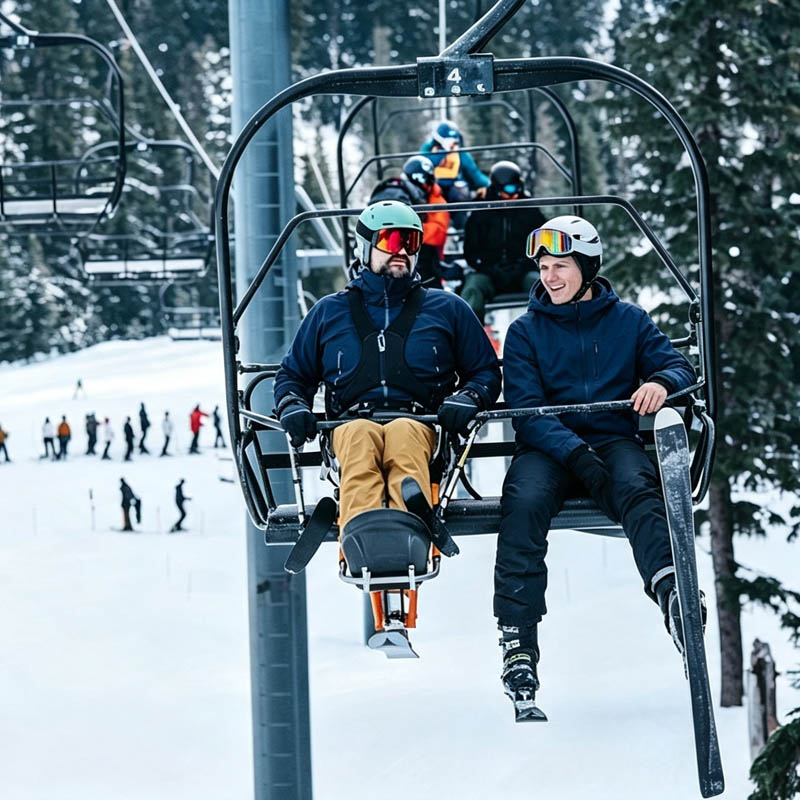
The Smith photochromic ski goggles lineup is crowned by the highly praised smith i/o mag (also commonly referred to as the Smith I/O MAG or the smith mag i/o). This premium goggle represents the ultimate integration of style, safety, and optical superiority. To combat slow transition times in extreme cold, Smith formulated their proprietary lens pigments to react to visible light and UV rays rather than air temperature. This keeps the transition active even in deep sub-zero conditions.
The Smith I/O MAG goggles feature the brand’s MAG magnetic swap technology, which uses ultra-strong N52 magnets paired with physical outrigger locking clips for dual-axis protection during hard crashes. Each goggle includes a primary smith i/o mag photochromic lens (installed) and a dedicated high-VLT storm lens (such as the ChromaPop Storm Yellow Flash at 65%VLT) for true whiteout days.
How We Tested It: Our lead tester wore the I/O MAG across 20+ resort days in Colorado, including sudden mid-run storm shifts in Vail’s China Bowl, as well as high-alpine backcountry ascents. We evaluated helmet integration across Smith Vantage and Sweet Protection helmets, timed lens-swap speed on chairlifts with gloves on, and tested low-light contrast during heavy snowfall.
Pro Photochromic Tint Options:
- Pro Blue Mirror (Copper Blue Base): Exceptional contrast; delivers a balanced, natural view of snow ripples and changes in shade.
- Pro Red Mirror (Copper Red Base): High contrast with a flashy, mirrored outer look.
- Pro Gold Mirror (Copper Gold Base): Offers the widest light transmission range (15% – 57%), though slightly more neutral in color contrast.
Pros:
- Smith ChromaPop contrast enhancement filters out light crossover wavelengths to make terrain details pop.
- Speeds up transition times in sub-zero climates; reacts twice as fast as older generations of Smith ChromaPop photochromic lenses.
- Packaged with a secondary low-light smith i/o mag replacement lens for complete coverage.
- Extremely comfortable 3-layer DriWix face foam and Responsive Fit™ frame.
Cons :
- Premium price point reflects its high-end feature set
- Frameless perimeter requires quick care when handling to avoid slight outer lens smudging during swaps
2. Julbo Cyrius
- Price: $260.00 (Cyrius X version available for $155.95)
- Lens Shape: Cylindrical
- VLT Range: 5% – 83% (Reactiv 0-4) or 17% – 75% (Reactiv 1-3)
When it comes to high-altitude performance, Julbo photochromic ski goggles are highly revered, and the Julbo Cyrius is a standout model. Unlike other brands that apply a light-sensitive spray-on coating, Julbo injects the photochromic molecules directly into the Trivex polymer structure. This ensures the adaptive capabilities of the Julbo Cyrius goggles never degrade or fade over the lifespan of the goggle.
A detailed Julbo Cyrius review reveals that this goggle offers exceptional optical performance with two premier Julbo Cyrius photochromic lens configurations. The Reactiv 1-3 High Contrast serves as a true “one-and-done” lens for most riders. For the ultimate extreme swing, the Reactiv 0-4 High Contrast Julbo Cyrius photochromic goggles are incredible—transitioning from virtually clear (83% VLT) for night skiing and dark timber lines, all the way to a Category 4 deep glacier protection tint (5% VLT) under intense high-alpine UV light.
How We Tested It: We put the Cyrius through 3 months of backcountry splitboarding at Berthoud Pass, CO, as well as resort laps in variable sunlight and shadow. We timed transition speeds under ambient UV light (averaging ~25 seconds from clear to dark) and tested lens clarity during early-morning skin tracks and late-afternoon dusk runs.

Pros:
- Permanent light-adaptive chemistry is baked into the lens matrix and will never wear out.
- Reactiv 0-4 VLT swing is the widest on the market, accommodating night skiing to high-altitude glaciers.
- Close-to-face cylindrical design minimizes the frame profile and maximizes peripheral vision.
- Outstanding anti-fog backing with integrated frame-slit ventilation channels.
Cons :
- Soft, extra-pliable polyurethane frame requires mindful handling when packing tightly into a gear bag
- Classic notch-and-groove system takes a couple of minutes to install a replacement lens
3. Bollé Nevada Photochromic
- Price: $260.00
- Lens Shape: Cylindrical
- VLT Range: 15% – 51%(Category 1 to Category 3)
Bollé leverages over 130 years of optics engineering to deliver the Nevada, widely recognized in its premium format as the Bollé Nevada photochromic polarized ski goggles king. The standout feature of the Bollé Nevada Phantom Photochromic is its 50% semi-polarized film. Standard 100% polarized goggles cut out all glare, which can prevent you from seeing icy patches because reflections off ice look identical to packed snow. By lowering polarization to 50%, Bollé filters out blinding glare and eye-straining reflections while allowing enough surface reflection through to clearly highlight dangerous ice patches.
The lens itself is molded from NXT®, an ultra-durable, highly clear polymer originally developed for military jet canopies. Combined with Bollé’s Low Temperature Sensitivity (LTS) technology, this Bollé photochromic ski goggles option maintains active, fast-reacting transition times (darkening in about 20 seconds) down to -25℃.
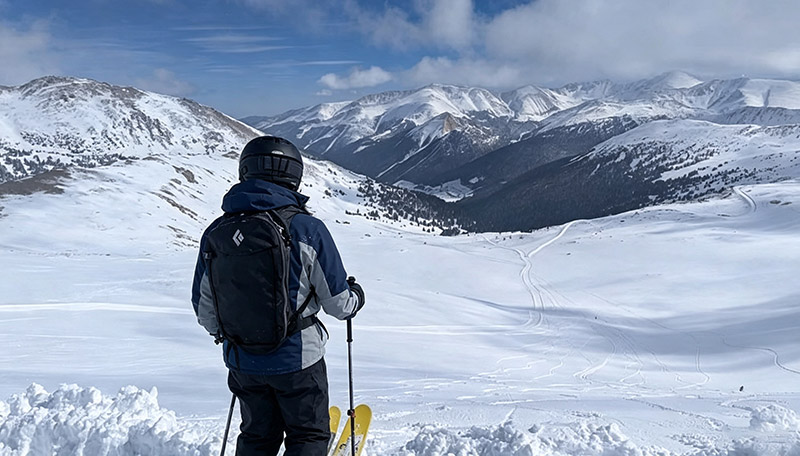
How We Tested It: Our team tested the Nevada in single-digit temperatures (0℉ to 15 ℉) at Jones Pass, CO. We paid close attention to how the 50% semi-polarization handled hardpack and ice patches on high-speed groomers, while evaluating Flow-Tech venting during heavy physical exertion.
Pros:
- 50% polarization provides excellent terrain-reading clarity without hiding dangerous ice sheets.
- NXT® lens chemistry offers industry-leading impact resistance and crisp optical clarity.
- Highly effective Platinum anti-fog and scratch-resistant treatment.
- Flow-Tech® venting and triple-density foam prevent draft and internal moisture build-up.
Cons :
- Cylindrical geometry offers slightly less vertical peripheral view than oversized spherical options
- Frame features prominent Bollé side branding
4. POC Fovea Photochromic
- Price: $250.00
- Lens Shape: Toric
- VLT Range: 13% – 55%(Category 1 to Category 3)
Developed in collaboration with POC team athletes, the poc fovea has earned a dedicated following for its supreme safety, durability, and classic styling. The poc fovea goggles feature a premium Clarity Photochromic toric lens. The toric shape minimizes optical distortion across your entire field of view, keeping both vertical and horizontal peripherals perfectly sharp.
This premier poc photochromic ski goggles option is constructed from a malleable polyurethane (PU) that stays incredibly soft and flexible even in extreme, sub-zero conditions, ensuring a safe, flush, and comfortable facial seal. Dirt- and water-resistant treatments on the lens shield your vision from sweat and greasy fingerprints on the slopes.
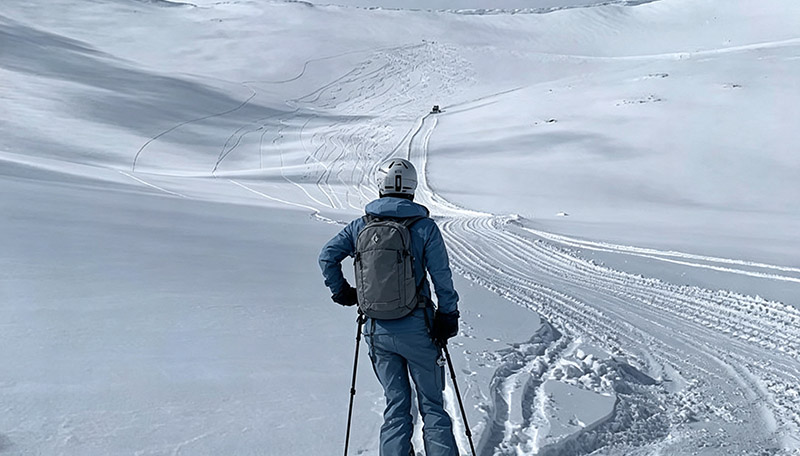
How We Tested It: We tested the Fovea across multi-sport winter activities in Jackson Hole, WY—ranging from resort riding and cross-country skiing to high-speed snowmobiling. We tested strap security against helmets and beanies, and verified lens clarity under groomer headlights at night.
Pros:
- Carl Zeiss toric lens technology offers exceptional, distortion-free optical quality.
- PU frame remains pliable and comfortable in the most severe alpine climates.
- Highly versatile fit that integrates seamlessly with helmets (especially POC ski and sled helmets).
- Double-silicone beads on the inside strap keep the goggles securely locked in place.
Cons :
- Fixed frame design means the lens is non-magnetic, intended to be kept permanently installed
- Ships with a soft microfiber pouch rather than a rigid molded case
5. Smith Skyline
- Price: $193.00
- Lens Shape: Spherical
- VLT Range: 20% – 40%(Photochromic Red Mirror) or 30% – 50% (Photochromic Rose Flash)
The rimless, spherical Smith Skyline is designed for riders who want high-end optics in a sleek, compact medium frame shape. It sits closer to your face than oversized goggles, eliminating tunnel vision and maintaining excellent horizontal and downward peripheral vision.
A deep Smith Skyline goggle review reveals that, unlike the I/O MAG, the Smith Skyline goggle comes with only one lens by default. Furthermore, its photochromic range is relatively narrow. For instance, the popular Photochromic Rose Flash (30% – 50%VLT) is engineered as a partial-sun and variable-light daily driver. For those with alternative facial structures, the Smith Skyline XL Low Bridge Fit goggles offer the same technology in a wider nasal layout.
How We Tested It: Tested extensively across resort trips in British Columbia and Nozawa, Japan. We evaluated facial foam comfort during long days on the mountain, tested peripheral downward vision, and verified strap-clip usability with cold gloves.
Pros:
- Compact, modern frameless silhouette matches well with smaller face shapes and helmets.
- High-quality Smith Skyline ChromaPop contrast enhancement.
- Rear-strap clip adds solid convenience when pulling them off your helmet or beanie.
Cons
- Traditional frame-pop lens changing requires a few extra seconds compared to magnetic models
- Mid-range VLT spread (30%-50%) is optimized as an all-around daily driver rather than an extreme storm/night lens
6. Glade Adapt 2
- Price: $149.00 (often on sale for $112.00)
- Lens Shape: Cylindrical
- VLT Range: 16% – 65% (Reveal Photochromic Blue Mirror tested at 14% – 54%)
Operating as a direct-to-consumer brand out of Breckenridge, Colorado, Glade Optics has created a major market disruptor with the Glade Adapt 2. This goggle delivers a premium, dual-pane photochromic experience at half the price of legacy competitors.
Using an Italian-made lens equipped with their proprietary Glade Optics Adapt 2 lens reveal photochromic technology, the Glade Adapt ski goggles photochromic option transitions effortlessly from cloudy storms to sunny groomers. It is also exceptionally fog-resistant; with full-length vents on the top, bottom, and adjacent to the strap, a standard Glade Adapt 2 review reports they are virtually impossible to fog up, even when riding with a thick neck gaiter.
The lineup features multiple lens configurations, headlined by the Glade Adapt 2 Reveal 4K Photochromic series, which further elevates color contrast and definition. For those preferring a darker, understated stealth finish, the black variant of this photochromic line comes highly recommended. Designed for youth wearers and smaller face shapes, the Glade Optics Adapt 2S delivers identical high-performance optics in a compact, downsized frame.
How We Tested It: Tested over 15 resort and backcountry powder days in Utah and Wyoming. We intentionally wore heavy face masks and neck gaiters while standing in warm lift lines to test the perimeter venting, and tracked light adaptation during fast transitions between bright alpine bowls and shaded tree glades.
Pros:
- Tremendous value under $150 for highly reactive light-adaptive technology.
- Standard-setting fog resistance due to high-surface-area circumferential venting.
- Soft microfleece backing with triple-density foam contours naturally to medium and large faces.
Cons :
- Non-magnetic lens housing takes slightly longer to swap if replacing a worn lens
- High UV exposure at intense high altitudes can keep the lens slightly darker during thin overcast windows
7. Fukosports HY197D
- Price: $10-$20
- Lens Shape: Cylindrical
- VLT Range: 15% – 54%(Category 1 to Category 3)
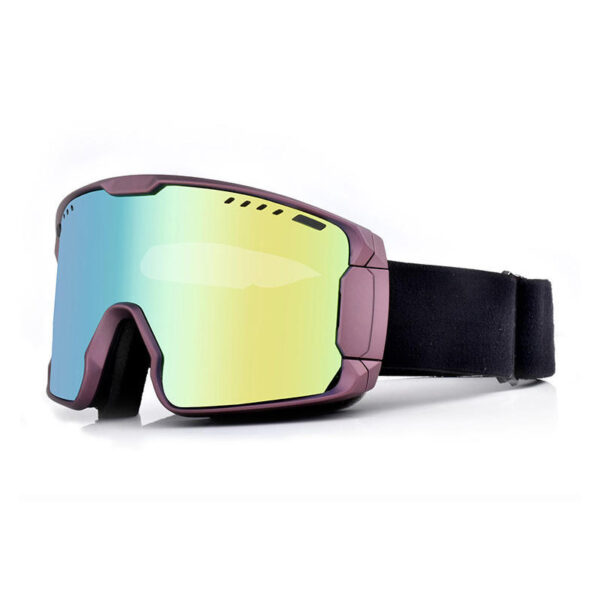
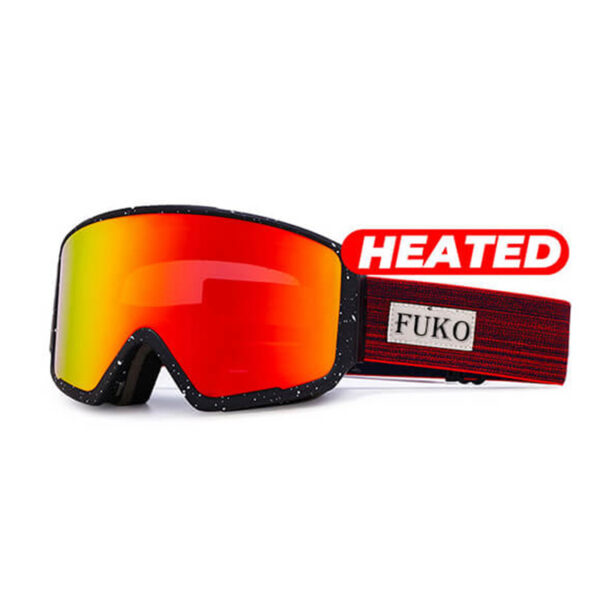
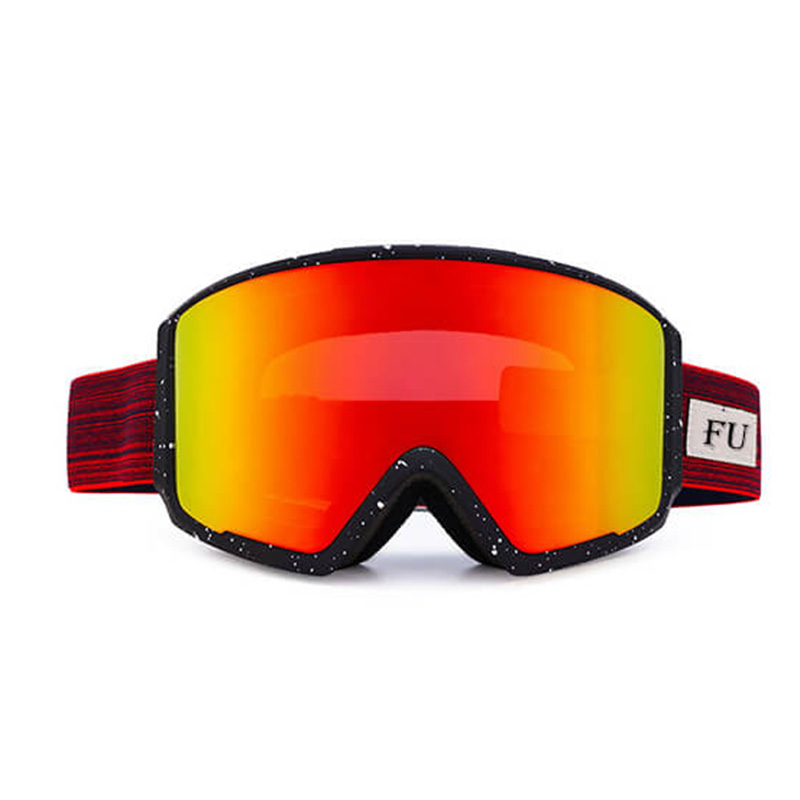
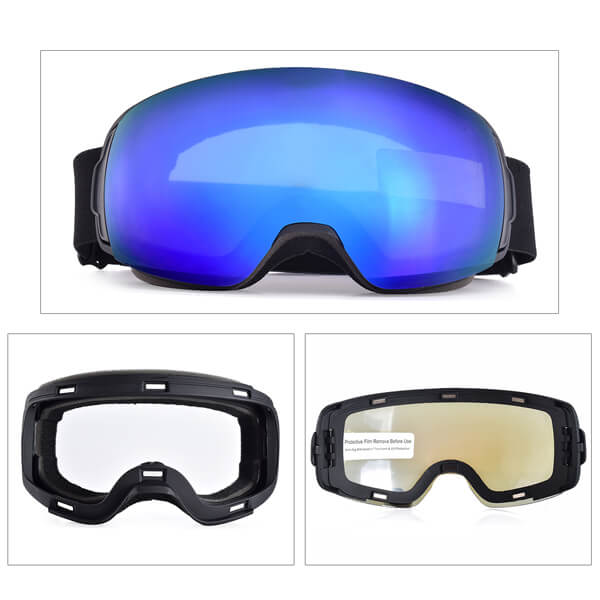
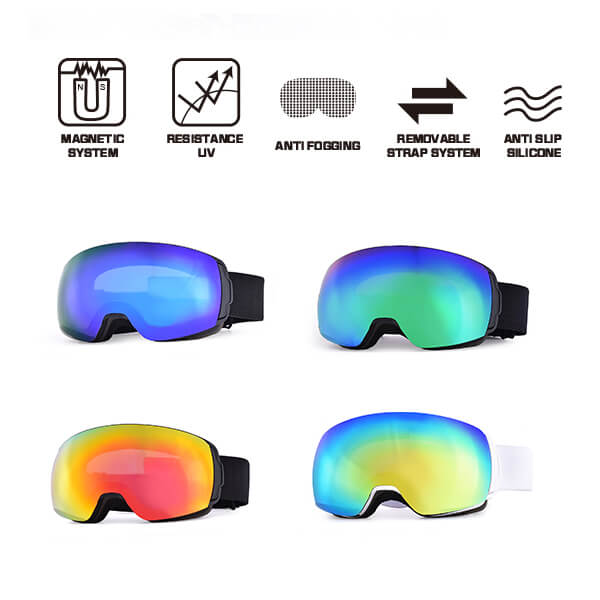
For budget-conscious riders seeking an entry point into the world of light-adaptive technology, the Fukosports HY197D is our top cheap photochromic ski goggles recommendation. It brings modern convenience to a sub-$100 price bracket by pairing a dual-pane cylindrical photochromic lens with a magnetic quick-swap frame.
With a VLT range of 15% to 54%, the HY197D adapts comfortably to shifting light conditions, cutting out glaring sun while clearing up significantly when clouds roll over. Its secure, multi-point magnetic lens retention system allows you to pop the lens off in seconds to wipe away moisture or transition to a fully clear night-skiing lens.
How We Tested It: Tested during resort groomer laps, afternoon light shifts, and night-skiing sessions under stadium lights. We evaluated magnet retention during sudden stops, verified frame seal against cold drafts, and measured light-adaptation speeds in variable weather.
Pros:
- Exceptionally affordable photochromic entry point.
- High-strength magnetic lens-changing system is incredibly fast and user-friendly.
- Comfortable, soft triple-layer face foam.
Cons:
- The transition response is slightly calmer in extreme sub-zero cold than in high-end LTS models.
- Standard contrast tint offers a clean view rather than hyper-vivid color filtering
5. Buying Guide: Finding the Perfect Fit & Geometry
Selecting the perfect pair of photochromic goggles goes beyond choosing the right lens tint. You must also pay close attention to frame geometry, facial fit, and gear integration.
Standard vs. Low Bridge Fit
A common issue skiers face is “goggle gap” at the bridge of the nose. If the goggle frame doesn’t seal tightly against your nasal bone, cold wind, ice, and powder will rush into the frame, freezing your face and instantly fogging up the interior lens.
- Standard Fit: Designed for individuals with a high, prominent nasal bridge.
- Low Bridge Fit (formerly Asian Fit): Engineered specifically for individuals with higher cheekbones and a flatter, lower nose bridge. Low Bridge goggles feature extra layers of contoured foam padding around the nasal pocket (as highlighted in Smith’s low-bridge offerings and POC’s designs). This creates a secure, custom seal that blocks out cold drafts, preventing both frostbite and interior condensation.
Helmet Integration
To prevent the dreaded “gaper gap” (an exposed forehead between your helmet brim and the top of your goggles), always try your goggles on with your primary ski helmet.
- Look for a flush, seamless contour along the top arc of the goggle frame.
- Ensure the helmet’s brim does not push down on the goggles, as this will press the frame painfully into the bridge of your nose and restrict your breathing.
- The top vents of the goggle must align closely with the lower venting channels of your helmet to allow the helmet’s integrated exhaust systems (such as Smith’s AirEvac™ or Julbo’s airflow channels) to continually pull warm, moist air up and away from your face.
How to Clean & Change Smith ChromaPop Lenses
Whether you have the I/O MAG or the Skyline, maintaining your lens is crucial.
- How to change Smith ChromaPop lenses: On the I/O MAG, push the side locking lever located on each temple outrigger to release the magnetic seal, then pop the lens off. On the Skyline, gently pull the flexible frame away from the lens notches starting at the top corners, peeling the frame back until the lens releases. To reinstall, guide the lens keyways into the nasal slot first, then slide the lens into the top and side grooves.
- How to clean Smith ChromaPop lenses: Blow away any loose snow or dust first. Lightly fog the exterior lens with your breath and wipe gently using the microfiber bag. Never wipe a wet inner lens, as you will scratch the Fog-X/5X hydrophilic coating. If grease smudges the inner lens, wash with lukewarm water and a drop of anti-grease dish soap and let it air-dry.
6. FAQ
1. Which photochromic lenses are better?
Lenses that utilize injected-pigment technology (such as Julbo’s REACTIV or Bollé’s Phantom) are superior to cheap, surface-coated lenses. Injected photochromic dyes are chemically bound within the Trivex or NXT lens polymer structure. They never wear out, flake off, or degrade from sunlight exposure, and they transition significantly faster in extreme cold. Additionally, prioritize lenses featuring Low Temperature Sensitivity (LTS) to ensure the lens functions reliably down to sub-zero temperatures.
2. Is photochromic better than polarized for skiing?
For general skiing, photochromic is highly superior to traditional 100% polarized lenses. Standard polarization blocks all reflected glare, which sounds ideal but actually hides dangerous sheets of ice by making them look identical to packed snow. Photochromic vs polarized ski goggles comparisons show that photochromic lenses excel by adapting on the fly to changing cloud cover, allowing you to ride all day with one lens. If you want the benefits of both, seek out a polarized photochromic ski goggles option that uses semi-polarization (like Bollé’s Phantom+ with 50% polarization), which cuts blinding glare while preserving enough surface reflection for you to spot slick ice early.
3. Do photochromic lenses go completely clear?
Most photochromic ski goggles do not go completely clear. They are typically optimized to clear up to around 55%-75 % VLT (Category 1), which retains a subtle rose, amber, or yellow contrast tint to help you see variations in flat, storm-day light. However, extreme specialized lenses—such as the Julbo REACTIV 0-4 High Contrast—are engineered to clear up to 83% VLT (Category 0), making them virtually clear and perfectly suited for night skiing under bright stadium lights.
7. Budget Spotlight & Final Verdict
Fukosports HY197D: The Budget Champion
For riders looking to maximize visual performance while protecting their gear budget, the Fukosports HY197D ($89.00 MSRP) stands out as 2026’s best value photochromic ski goggles option. It successfully marries highly capable, dual-pane light-adaptive technology with a super-fast, modular magnetic lens-changing design, providing unparalleled versatility for both standard resort groomers and demanding night-skiing enthusiasts. While premium options like Smith’s ChromaPop or Julbo’s REACTIV lines deliver superior visual pop in flat storm conditions, the sheer value of the Fukosports HY197D makes it an outstanding, highly recommended choice for budget-conscious skiers and snowboarders.
Final Verdict: The Value Proposition
When looking at the high cost of modern winter optics, many skiers recoil at the thought of spending $250 to $300 on a single pair of goggles. However, when you calculate the math, buying one high-quality photochromic goggle is actually highly cost-effective.
A traditional premium setup requires purchasing a frame with a sunny-day lens, plus a secondary low-light lens (which run $90 to $150 for high-end static replacements). By investing in a single, high-performance photochromic goggle, you bypass the expense of keeping a secondary lens on hand, protect your eyes from the dangers of flat light, and eliminate the lift-line struggle forever. In 2026, photochromic isn’t just a luxury—it’s a game-changer.