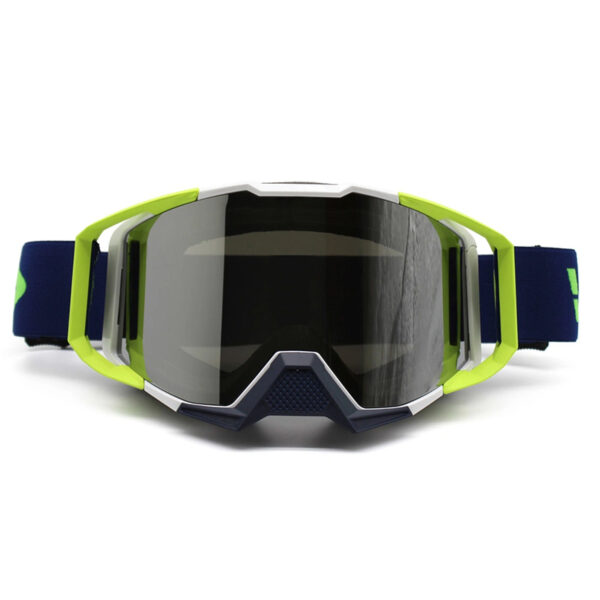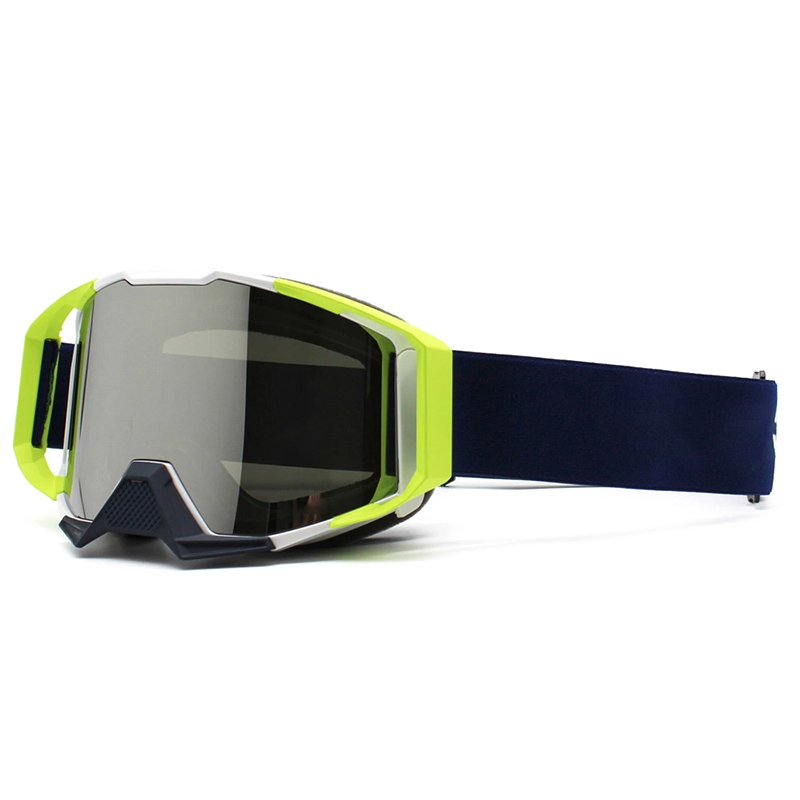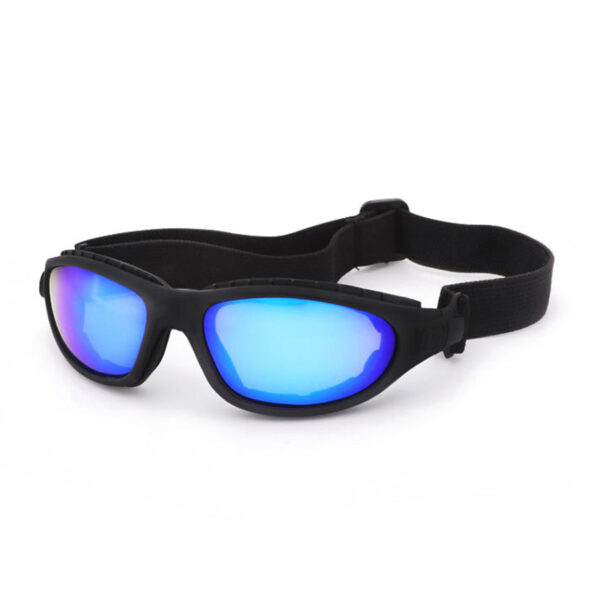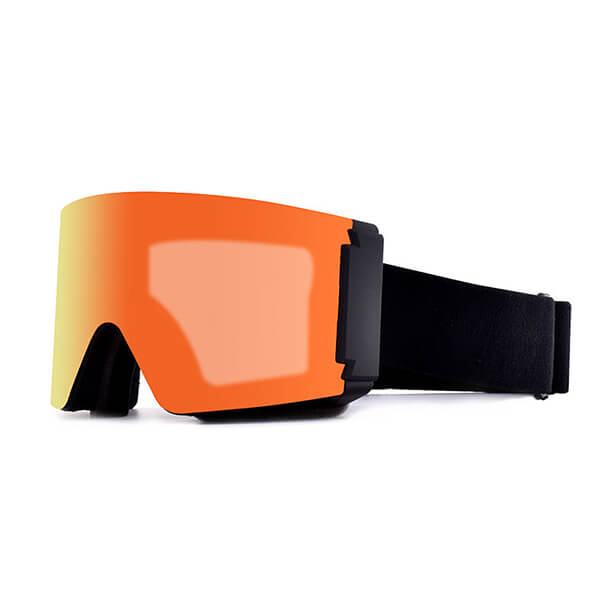
Foggy ski goggles can turn a good day on the mountain into a frustrating one. A lens may stay clear when you leave the lodge, then fog up after a few runs, during a storm, or when you stop on a cold lift.
It is tempting to assume that buying a more expensive pair of ski goggles will solve the problem. But skier experiences suggest that fogging is more complicated than price or brand. Premium Oakley, Smith, and Anon goggles can still fog, while some inexpensive goggles perform surprisingly well for certain skiers. Anti-fog treatments, better ventilation, fan systems, and heated ski goggles can all help, but they address the problem in different ways.
The key question is therefore not simply “What are the best ski goggles?” It is “Why are my goggles fogging, and do I actually need an active solution such as heated ski goggles?”
Part 1. Why Do Ski Goggles Fog Up?
Ski goggles fog when warm, humid air comes into contact with a colder lens and condenses into tiny water droplets. Your breath is one of the main sources of that moisture, but it is not the only one.
Cold temperatures, sweating, snowfall, humidity, ventilation, face coverings, helmet fit, and even how you handle the goggles can all influence how quickly condensation develops.
Common Causes of Ski Goggle Fogging
Several conditions can increase the chance of fogging:
- Cold outdoor temperatures
- Heavy snowfall or high humidity
- Sweating during aggressive skiing
- A balaclava or neck gaiter directing breath upward
- Blocked goggle or helmet vents
- Snow accumulating around the vents
- Repeatedly removing and replacing the goggles
- Putting warm goggles directly onto your face
- Moisture trapped inside the lens
- Glasses or optical inserts reducing airflow
This is why two skiers can wear the same model and have completely different experiences.
A goggle that works perfectly for someone skiing groomed runs in moderate weather may struggle for another skier who runs hot, wears a face covering, and spends hours in heavy snowfall.
Your Face Covering Can Be Part of the Problem
One of the most practical lessons from skier discussions is that fogging may originate below the goggles rather than inside them.
A balaclava or neck gaiter can redirect warm, humid breath toward the bottom or ventilation areas of the goggles. On extremely cold days, this can become worse because skiers tend to pull face coverings higher and wear more layers.
If your goggles fog shortly after you pull a mask over your nose and mouth, the mask may be contributing to the problem.
Before replacing your goggles, check:
- Is your breath being directed toward the lens?
- Is fabric covering the goggle vents?
- Is your helmet interfering with airflow?
- Are you sweating heavily?
- Does fogging happen mainly when you stop?
- Does it happen after putting your goggles back on?
- Is it worse during storms or powder days?
These clues can help determine whether you actually need new goggles—or simply a better setup.
Ventilation Matters as Much as Anti-Fog Coatings
A ski goggle needs to move humid air away from the lens. Anti-fog coatings can help, but they work within a larger ventilation system. If snow, fabric, moisture, or helmet components block the vents, humid air can remain trapped inside the goggle.
When comparing goggles, look beyond the words “anti-fog.” Consider the size and placement of the vents, how they interact with your helmet, and whether snow tends to accumulate around them.
Part 2. How to Stop Ski Goggles From Fogging Without Heated Goggles
Heated ski goggles can be useful, but they should not necessarily be your first solution. If the underlying problem is blocked ventilation or excessive moisture, active heating may simply be treating the symptom. A few simple changes can solve occasional fogging without adding batteries or electronics to your setup.
1. Keep Your Goggles On When Practical
Repeatedly moving goggles between your face, helmet, forehead, and warm indoor spaces can expose the lens to changing temperatures and moisture. Some skiers therefore prefer putting their goggles on before heading out and leaving them there as much as possible. Others remove them when standing still or during breaks.
There is no universal rule. The more useful principle is to avoid unnecessary exposure to warm, humid air and large temperature changes.
2. Manage Body Heat and Sweat
Heavy sweating can overwhelm even a well-designed anti-fog system. If your goggles tend to fog after several aggressive runs rather than immediately after putting them on, body heat may be a bigger factor than the lens itself.
Opening helmet vents, adjusting layers, and managing exertion can reduce the amount of moisture entering the goggle environment.
3. Keep the Vents Clear
Snow and moisture around the ventilation openings can significantly reduce airflow. During powder days, periodically check whether snow has accumulated over the upper vents. Your face covering should also sit below rather than directly over critical airflow areas whenever possible.
4. Use Anti-Fog Treatments When Appropriate
Anti-fog sprays, wipes, and treatments can be useful for occasional fogging. Products such as Cat Crap are frequently mentioned by skiers as an inexpensive way to improve an existing setup.
But anti-fog treatment is not a substitute for ventilation. If warm, humid air is continuously entering the goggles and cannot escape, a coating alone may not solve the problem.
5. Be Careful When Cleaning the Inner Lens
One common mistake is aggressively wiping a wet inner lens. Depending on the lens technology, repeated rubbing can damage the anti-fog treatment. A better general approach is to let moisture dry naturally and follow the manufacturer’s recommended cleaning method.
Avoid abrasive materials, excessive heat, and unnecessary contact with the inside of the lens.
6. When These Solutions Are Not Enough
If you have already adjusted your mask, improved ventilation, managed sweating, kept the lens dry, and tried conventional anti-fog solutions—but your goggles still fog repeatedly—then you may have a genuine need for a more active solution. That is where heated ski goggles and fan-assisted goggles become more relevant.
Part 3. What Are Heated Ski Goggles and How Do They Work?
Heated ski goggles use a powered heating system to warm the lens. The goal is to reduce the temperature difference between the lens and the warm, humid air inside the goggle, making condensation less likely to form.
Traditional ski goggles mainly rely on passive solutions: double lenses + anti-fog treatment + ventilation. Heated ski goggles add another layer: active lens temperature control. This makes them fundamentally different from simply buying a goggle with a better anti-fog coating.
Do Heated Ski Goggles Really Prevent Fogging?
They can significantly reduce condensation, but they should not be thought of as completely fog-proof.
Heating addresses one of the main conditions that causes condensation: a cold lens surface. However, moisture can still enter the goggle through your breath, sweat, snow, or poor ventilation. That means heated ski goggles work best as part of a complete anti-fog system rather than as a replacement for ventilation.
Heated vs. Fan Ski Goggles
Heated and fan-assisted goggles take different approaches to the same problem.
Heated ski goggles warm the lens. Fan goggles move humid air away from the lens. For someone who produces a lot of moisture, both approaches can be useful.
Fan goggles have also received positive feedback from skiers who struggled with conventional goggles. Older fan-assisted models, including Smith Turbo Fan goggles, are mentioned by some skiers as long-term solutions to persistent fogging. The trade-off is that both systems introduce additional electronics and require power.
A conventional goggle can simply be put on and used. A heated or fan-assisted goggle adds charging and battery management to your pre-ski routine.
Heated Goggles Are a Specialized Solution
This distinction matters. Heated ski goggles are not necessarily the logical next step for every skier. They are better understood as specialized equipment for persistent fogging problems.
If you rarely experience condensation, active heating may provide little practical benefit. If fogging repeatedly ruins your visibility despite otherwise good equipment and technique, the additional complexity may be worthwhile.
Tip: If you are a ski eyewear brand, distributor, or retailer looking to add heated ski goggles to your product line, working directly with a specialized sports eyewear manufacturer can offer more flexibility than sourcing only off-the-shelf products.
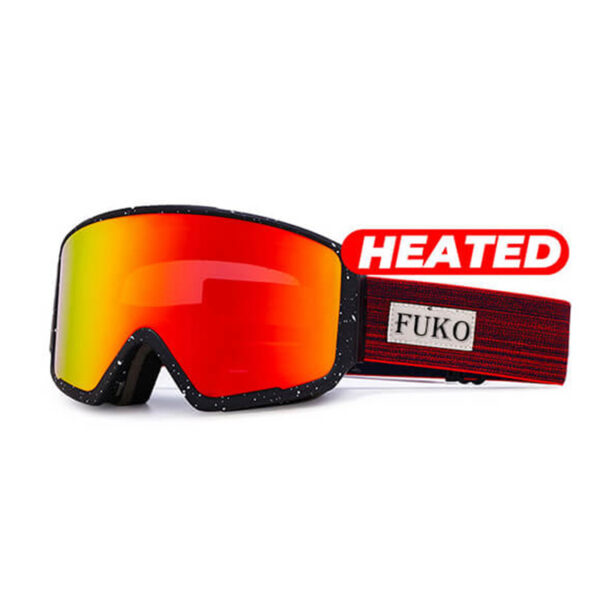
FukoSports specializes in custom ski goggles and sports eyewear, including electrothermal OTG heated ski goggles, with options for heated lens technology, OTG designs, magnetic lenses, and other product configurations. This can be useful when you need to develop heated goggles around specific fit, lens, branding, or market requirements.
Part 4. Who Should Consider Heated Ski Goggles?
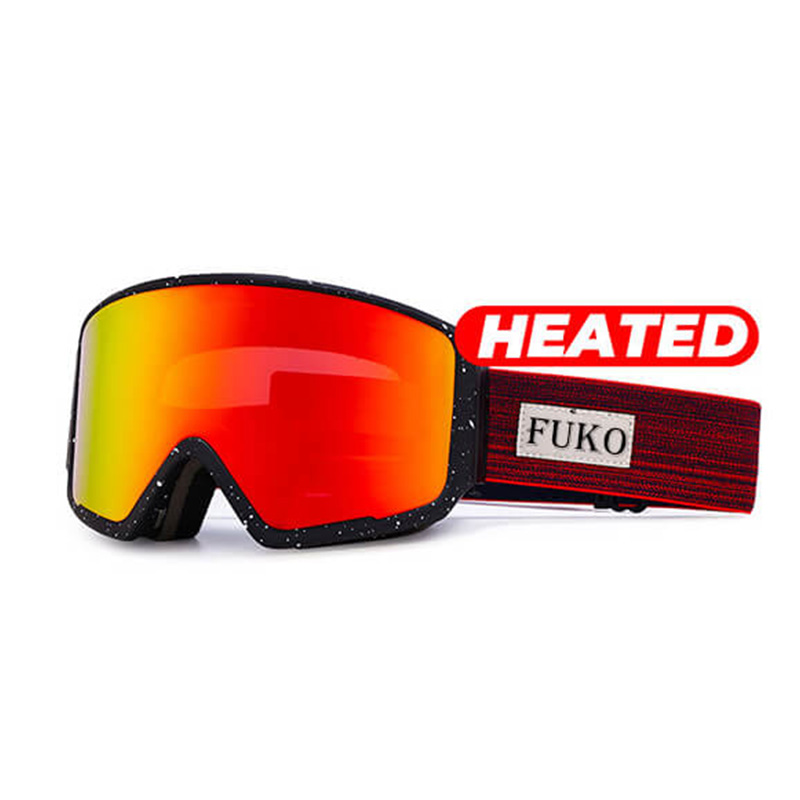
The value of heated ski goggles depends heavily on how, where, and how often you ski.
They are most relevant for skiers whose fogging problem is persistent rather than occasional.
Heavy Sweaters
If you generate a lot of body heat and sweat while skiing, your goggles may constantly be exposed to warm, humid air. For these skiers, simply buying a goggle with a stronger anti-fog coating may not always solve the problem.
Extreme Cold and Severe Weather
Very low temperatures create a larger temperature difference between the inside and outside of the lens. Heavy snowfall and wet conditions can also interfere with ventilation. If you regularly ski in extreme cold, storms, or wet snow, active anti-fog technology becomes more relevant.
Long Ski Sessions
Fogging may become more problematic over several hours as moisture accumulates and conditions change. Skiers who spend most of the day outdoors without returning to a lodge may value a more consistent active system.
Snowmobile Riders
Snowmobiling creates a particularly demanding environment for goggles because of cold temperatures, moisture, and sustained exposure to the elements. Some users in the discussion specifically described heated or fan-assisted goggles as useful in snowmobile conditions.
Glasses and OTG Users
People who wear glasses or optical inserts can face additional airflow and moisture challenges. The fit between glasses, inserts, face, and goggle creates another potential source of condensation, making active anti-fog systems worth considering for some users.
Skiers Who Have Already Tried Everything Else
This is perhaps the most important category.
If you have already tried:
- Better ventilation
- Different face coverings
- Anti-fog treatments
- Premium conventional goggles
- Proper lens care
- Moisture management
and still experience serious fogging, heated ski goggles become a much more reasonable purchase.
The question is no longer whether you could live without them. It is whether the cost and complexity are justified by how much the fogging problem affects your skiing.
Part 5. Heated vs. Premium vs. Cheap Ski Goggles: What Are You Actually Paying For?
The assumption that expensive goggles automatically fog less is too simplistic.
Real-world skier experiences show that price, brand, and anti-fog performance do not always move together. Some skiers report excellent results from premium Oakley, Smith, and Anon goggles. Others have experienced significant fogging with premium models.
At the same time, inexpensive goggles such as Outdoor Master have received positive feedback from some skiers, including users who appreciated low-cost replacement lenses. Other users reported fogging and moisture problems with the same type of budget equipment in colder or wetter conditions.
The useful conclusion is not that cheap goggles are equivalent to premium goggles.
It is that price alone does not determine whether a particular goggle will work for you.
What Premium Goggles Can Offer
Higher-priced goggles may provide advantages in:
- Optical clarity
- Lens technology
- Ventilation design
- Fit and face seal
- Construction quality
- Lens-changing systems
- Replacement-lens availability
- Performance across different conditions
These advantages can matter even if fogging is not your primary concern.
What Budget Goggles Can Offer
Affordable goggles can make sense for:
- Casual skiers
- People who ski only a few days each season
- Skiers in moderate conditions
- Buyers who want multiple inexpensive lenses
- Users who already have a setup that does not fog
If an inexpensive goggle gives you clear vision and fits properly, there is no technical reason to upgrade simply because a more expensive model exists.
What Heated Goggles Add
Heated goggles are different because you are paying for active fog control.
The additional cost is associated not just with lens quality but with the heating system, battery, controls, and electronics. That makes the value proposition very different from a conventional premium goggle.
| Type | Main Advantage | Potential Drawback | Best Suited For |
| Budget goggles | Low price and affordable lenses | Performance varies | Casual and budget-conscious skiers |
| Premium goggles | Optics, fit, ventilation, construction | Higher price | Frequent skiers and demanding conditions |
| Heated goggles | Active lens temperature control | Higher cost and charging | Persistent fogging |
| Fan goggles | Active moisture removal | Battery and mechanical complexity | Heavy sweaters and severe fogging |
| Anti-fog treatment | Low-cost improvement | Cannot fix underlying airflow problems | Occasional fogging |
The right comparison is therefore not simply cheap vs. expensive. It is: passive solution vs. premium passive solution vs. active anti-fog solution.
Part 6. Are Heated Ski Goggles Worth It?
Whether heated ski goggles are worth buying ultimately depends on the severity of your fogging problem.
For a skier who rarely experiences fogging, they may add unnecessary cost, charging, and complexity. For someone who repeatedly loses visibility despite using good conventional goggles and correcting ventilation and moisture issues, the equation is different.
A Simple Decision Guide
- If your goggles rarely fog: Keep your current setup unless you have another reason to upgrade.
- If they occasionally fog: Start with ventilation, face-covering adjustments, body-heat management, and proper lens care.
- If they frequently fog: Consider a better-fitting conventional goggle with stronger ventilation and lens technology.
- If they still fog after conventional solutions fail: Heated ski goggles or fan-assisted goggles may be worth considering.
What to Look for in Heated Ski Goggles
If you decide that active heating makes sense, do not look only for the word “heated.”
Consider:
- Heating system and temperature settings
- Battery life
- Charging method
- Lens clarity and optical quality
- Ventilation design
- Fit with your helmet
- Compatibility with glasses or OTG setups
- Lens replacement options
- Controls and ease of use
- Performance in the temperatures you actually ski in
- Weight and comfort
A heated goggle still needs to fit properly and provide adequate ventilation. Heating should complement the goggle’s overall design, not compensate for a fundamentally poor fit.
The Bottom Line
Heated ski goggles are best understood as a problem-solving product, not simply a more expensive version of regular goggles.
Start by identifying why your goggles fog. Fixing issues such as poor ventilation, excessive sweating, or breath trapped by a face covering may be enough. If fogging continues, heated goggles provide a more direct way to manage condensation.
There is no universal best goggle. Buy for the conditions you actually ski in—not simply for the price tag or logo.
For brands and retailers developing heated ski goggles, FukoSports offers custom sports eyewear solutions, including electrothermal OTG heated ski goggles.