Ski equipment lasts for years with proper care. After a few days on the mountain, you may notice scratches, dull edges, poor glide, or loose bindings. Sometimes a quick wax is enough; other times you need a full tune or serious repair. That’s where a ski repair service comes in.
Professional shops handle everything from waxing and edge sharpening to base repairs, binding adjustments, and remounting. The right service depends on your equipment’s condition and how you use it. This guide covers what’s included, machine wax vs. hot wax, repairability, and typical costs.
Part 1. What Does a Ski Repair Service Include?
“Ski repair” is a broad term. A shop may offer several different services rather than one standard repair package.
Common ski and snowboard services include:
- Waxing
- Edge sharpening
- Base grinding and structuring
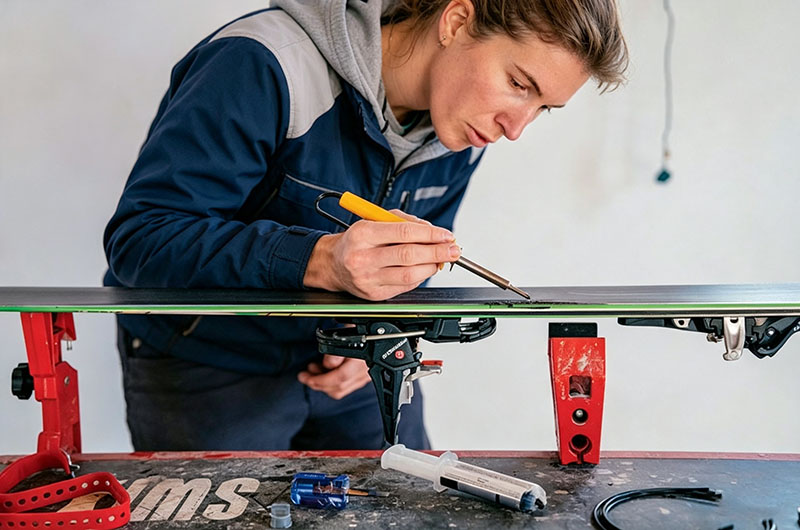
- P-Tex base repair
- Minor and major base repairs
- Binding adjustment and function testing
- Binding mounting or remounting
- Full ski or snowboard tune-ups
A basic tune-up is usually enough when your skis are in generally good condition but feel slow or difficult to control.
A repair tune is more appropriate when the base has deep scratches, gouges, or other damage.
For example, REI describes its standard ski and snowboard tune as including base grinding and structure, edge sharpening, and wax. Its repair tunes add base repairs for damaged equipment.
The important point is that you do not necessarily need a full repair every time your skis feel slow. Sometimes a simple wax or edge service is all that is needed.
Part 2. When Should You Get Your Skis or Snowboard Tuned?
You do not need to wait until your equipment is visibly damaged.
Here are some common signs that it is time for a tune:
Your skis feel slow
If your skis suddenly feel sticky or do not glide well on flatter sections, the base may be dry and in need of wax.
Your edges do not grip well
If your skis slide sideways on hard snow or icy sections, dull or damaged edges may be the problem.
You can see scratches or gouges
Small scratches are normal after riding over rocks or thin snow. Deeper gouges should be repaired before they get worse.
The base looks dry
A dry-looking base with whitish areas is often a sign that it needs wax.
Your bindings have been changed
If you have new boots, changed bindings, or moved bindings to another pair of skis, the setup should be checked by a qualified technician.
Your skis have been sitting unused
Even if you have not used your skis recently, a storage wax and a quick inspection can be useful before the next season.
Part 3. What Is Included in a Snowboard Tune-Up?
A snowboard tune-up is similar to a ski tune.
Depending on the shop, it may include:
- Base inspection
- Base flattening or grinding
- Edge sharpening
- Edge polishing
- Waxing
- Scraping and brushing
Some shops also offer base repairs as an add-on.
If you want a snowboard tune-up near you, check exactly what the quoted service includes.
A $50 “wax and sharpen” service is not necessarily comparable with a $100 full tune. The first may only include edge work and wax, while the second may include base grinding, structure, edge beveling, and more.
Part 4. How Much Does a Ski Service Cost?
Ski service prices vary by location, shop, equipment condition, and type of service. As a general guide, expect:
| Service | Typical Cost |
| Machine wax | $20–$30 |
| Hot wax | $35–$60 |
| Edge + wax | $45–$80 |
| Full tune | $75–$125+ |
| Minor base repair | $100–$140+ |
| Major repair | $125–$180+ |
| Binding adjustment/function test | $25–$40 |
| Ski mount/remount | $60–$120+ |
These are general price ranges rather than fixed rates. For example, REI Seattle lists machine wax at $25, hot wax at $45, and full tunes at $95–$115, while repair tunes range from $125 to $160. REI San Francisco lists machine wax at $25, hot wax at $50, full tunes at $105–$125, and repair tunes at $135–$170.
This is why searches such as ski repair San Francisco or REI Seattle ski shop can return different prices. Always check the local shop’s current service menu before booking.
For routine ski maintenance, recreational skiers may only need occasional waxing, edge sharpening, and one or two full tunes per season. Frequent skiers or those riding on hard snow may need more regular service. If your skis still glide well, hold an edge, and show no major damage, a simple wax or edge service may be enough.
How Much Does It Cost to Get Skis Remounted?
A ski remount involves removing and reinstalling bindings, so it typically costs more than a basic binding adjustment. Prices commonly range from $60–$120+, depending on the binding type and mounting work required. For example, Backcountry Seattle lists a ski mount/remount at $60, while Mammoth Mountain lists drill and system remounts at $90 and $70, respectively.
Bring your ski boots when having bindings mounted or adjusted, as the setup depends on the boot and binding combination. Some shops, including REI, require both boots for binding services.
Part 5. How to Find the Right Ski Repair Service Near You
When finding snowboard wax near you, do not choose a shop based on price alone.
Ask these questions before booking:
What does the service include?
A “tune” can mean different things at different shops.
Is wax included?
Some prices include machine wax. Others charge separately for hot wax.
Does the service include base grinding?
This matters if the base is uneven or heavily scratched.
Are minor repairs included?
Some shops include a limited number of repair spots. Others charge by the repair.
Do you perform binding function tests?
This is particularly important if you are having bindings mounted or adjusted.
How long will the service take?
Turnaround can change during peak season. A shop may also offer faster service for simple waxing or edge work.
Part 6. Machine Wax vs. Hot Wax: What’s the Difference?
Both machine wax and hot wax improve glide and protect the ski or snowboard base, but they suit different needs.
Machine wax is a quick, convenient option. The equipment applies wax efficiently and consistently, making it suitable for regular in-season maintenance or a quick refresh. It is also usually less expensive. If you are looking for machine wax snowboard or snowboard wax near me, machine waxing can be a practical choice when your board is otherwise in good condition.
Hot wax uses a waxing iron to apply wax by hand. It takes more time but gives the technician greater control over the application and temperature. It is a better choice when the base looks dry, you are preparing for a multi-day ski trip, or you want more thorough and longer-lasting maintenance.
| Situation | Better Choice |
| Quick refresh | Machine wax |
| Regular maintenance | Machine wax |
| Limited budget | Machine wax |
| Dry or neglected base | Hot wax |
| Before a multi-day trip | Hot wax |
| Deeper maintenance | Hot wax |
The same applies to snowboards. For machine wax vs hot wax snowboard, neither option is always better. Machine wax works well for quick maintenance, while hot wax is worth considering when your base needs more attention.
Price can also influence the decision. For example, REI San Francisco lists machine wax at $25 and hot wax at $50 for non-members. A full machine-wax tune is $105, compared with $125 for a hot-wax tune. If you are already paying for a full tune, the additional cost of hot wax may be relatively small.
Ski Repair Service FAQs
1. How much does a ski service cost?
A basic wax may cost around $20–$60, while a full ski or snowboard tune commonly falls around $75–$125 or more. Repairs, specialty services, and binding work can increase the total. Local prices vary significantly.
2. Can damaged skis be repaired?
Yes, many scratches, gouges, and base problems can be repaired. However, severe core damage, delamination, or major structural damage may make a repair impractical. A technician should inspect serious damage.
3. How much does ski maintenance cost?
Routine maintenance can be relatively inexpensive. A simple wax or edge service may cost less than $50, while a full tune can cost around $75–$125 or more. How often you need service depends on how frequently and where you ski.
4. How much does it cost to get skis remounted?
A ski remount commonly costs around $60–$120, although specialty bindings and more complicated mounting jobs can cost more. For example, current service menus from Backcountry and Mammoth Mountain list remount prices of $60 and $70–$90 depending on the type of mount.
5. How often should I tune my skis?
It depends on how often you ski and the conditions. Recreational skiers may only need a full tune once or twice a season, while frequent skiers may need more regular edge and wax maintenance. Inspect your equipment after each trip and service it when performance or visible damage indicates a problem.
Final Takeaway
A good ski repair service keeps your equipment gliding smoothly, gripping reliably, and lasting longer. Machine wax is a convenient option for quick maintenance, while hot wax is better suited to deeper care.
If you notice scratches, damaged edges, or binding issues, have your equipment checked by a professional. When comparing ski repair San Francisco, REI Seattle ski shop, ski binding adjustment near me, or snowboard tune up near me, always compare what each service includes—not just the price.
B2B Tip: Looking for sports eyewear for your outdoor business? When choosing a supplier, consider UV protection, lens quality, durability, customization, and production capabilities. Fukosport offers sports eyewear solutions designed for business needs.